
____________________________________________________________________________________________________
230,000 Miles Later: What Real Wear and Tear Actually Looks Like (2011 Nissan Versa)
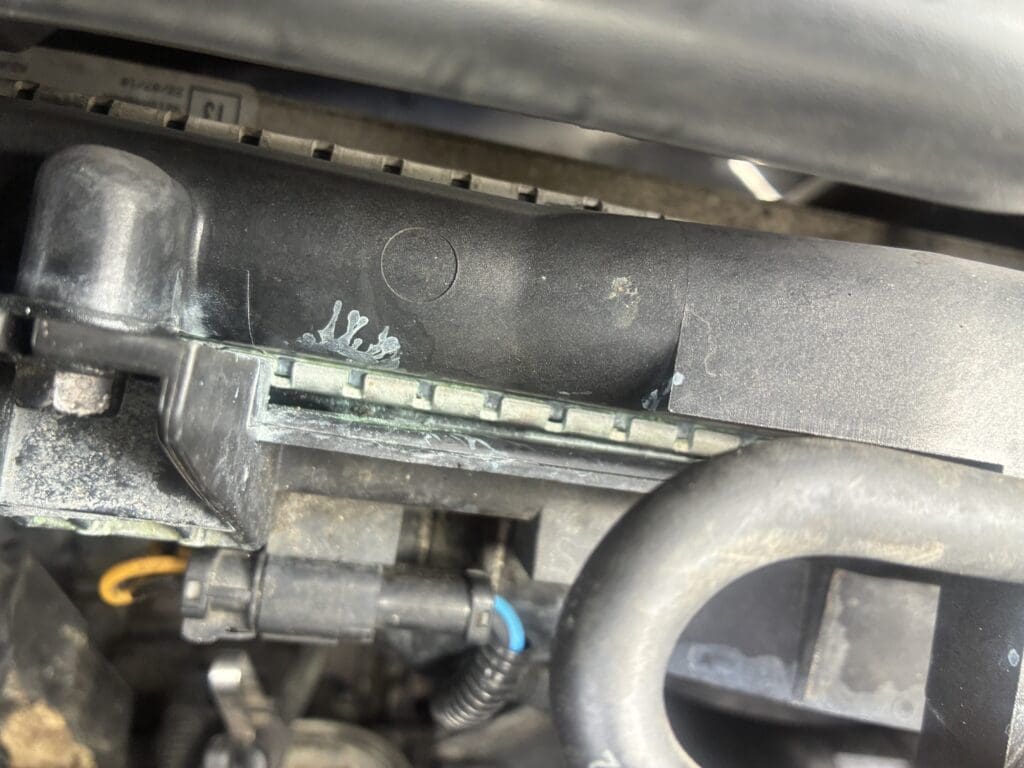
Every car reaches a point where mileage stops being a number on the dash and starts being a visible, physical thing you can point to under the hood. This 2011 Nissan Versa is a great example, 230,000 miles in, and the wear is showing up in exactly the places you’d expect, once you know where to look.
None of what follows is unusual for a car with this kind of mileage. But it’s a good real-world look at why certain components deserve regular attention as the odometer climbs.
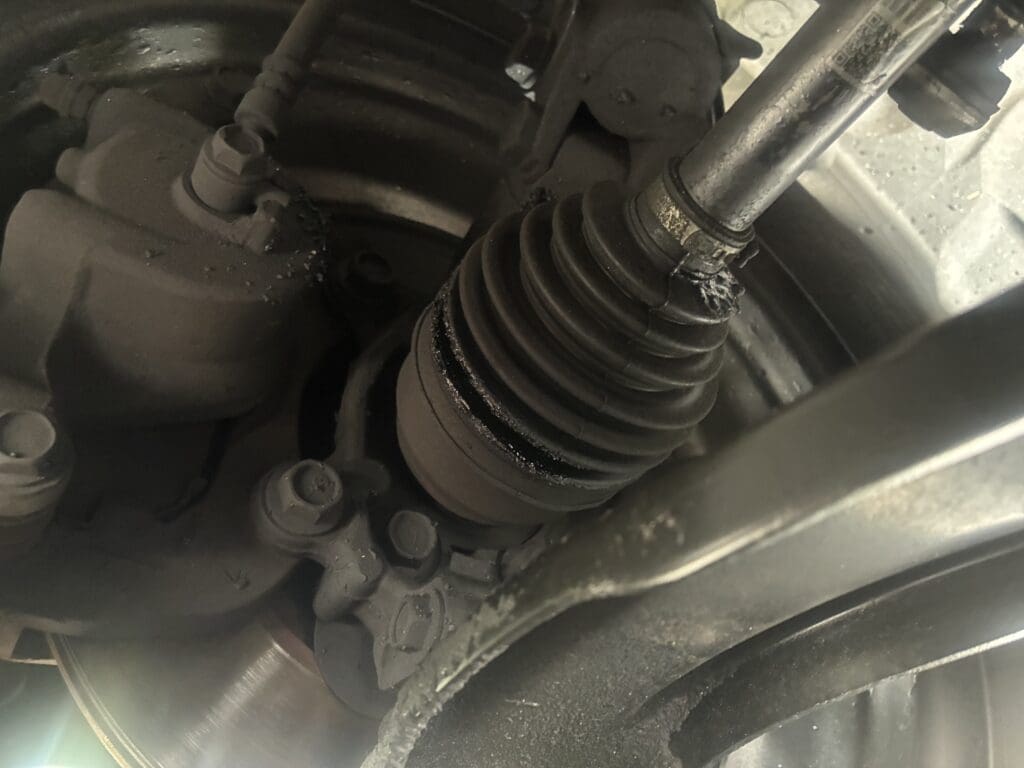
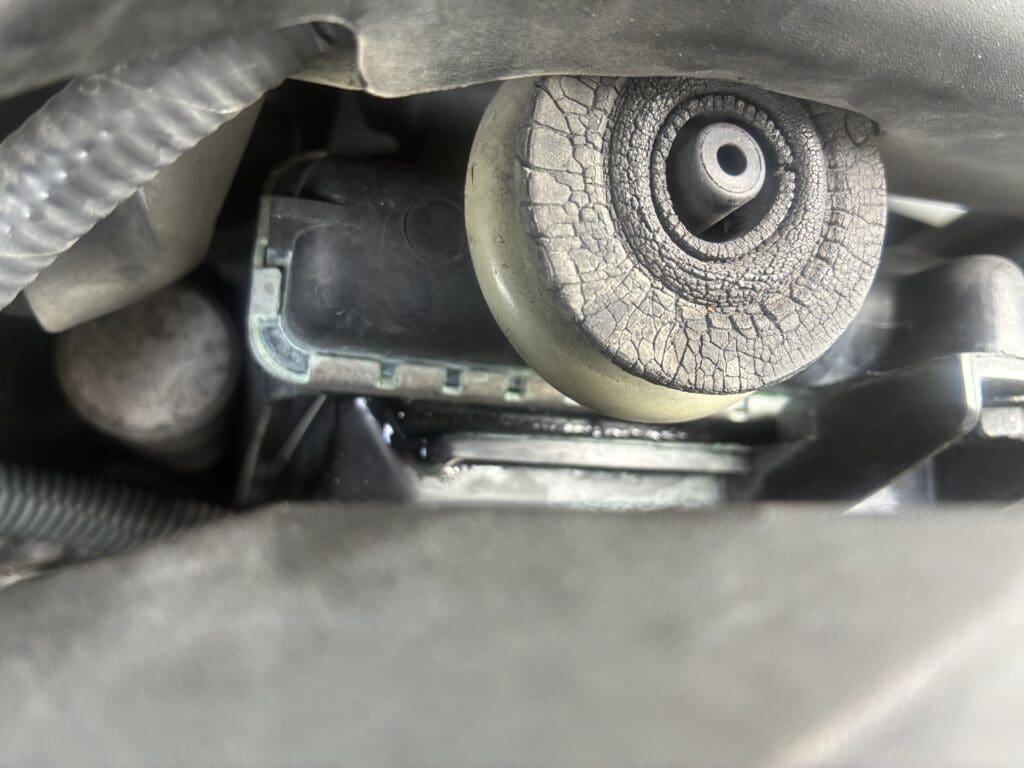
The CV Axle Boot
This rubber boot’s job is simple: keep grease inside the CV joint and keep dirt, water, and road grime out. Once it tears, like it has here, that seal is broken in both directions. Grease starts working its way out, and contaminants start working their way in. Left alone, that combination wears down the CV joint itself, which turns a relatively inexpensive boot replacement into a full CV joint or axle replacement. The earlier a torn boot gets caught, the smaller the fix stays.
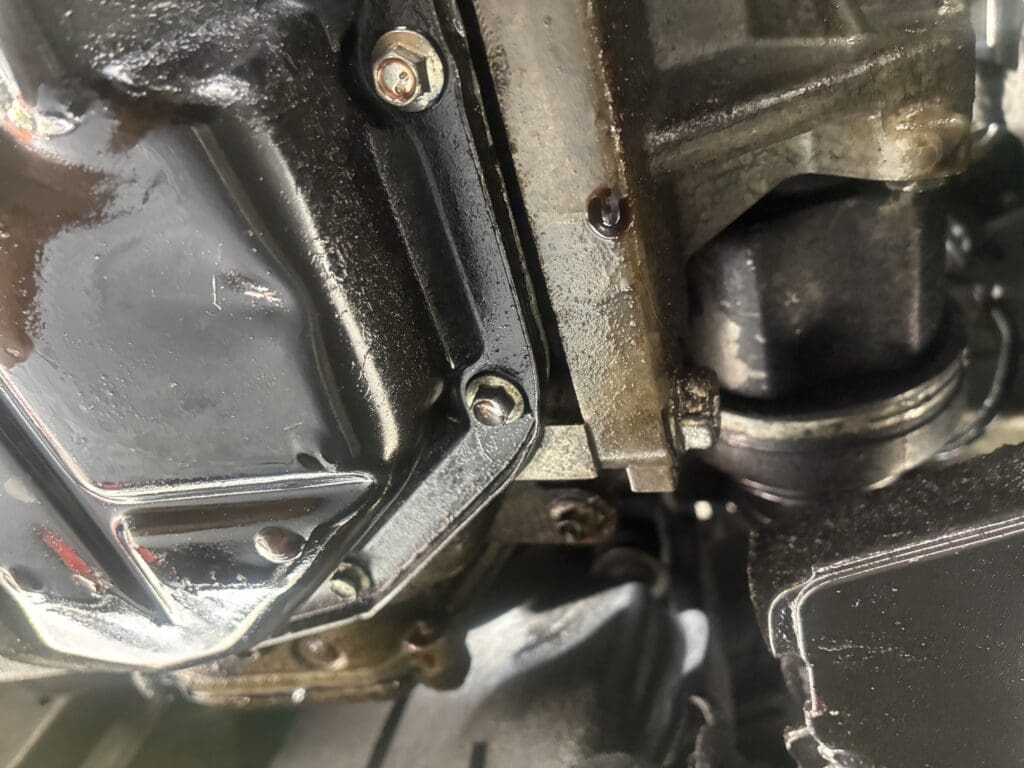
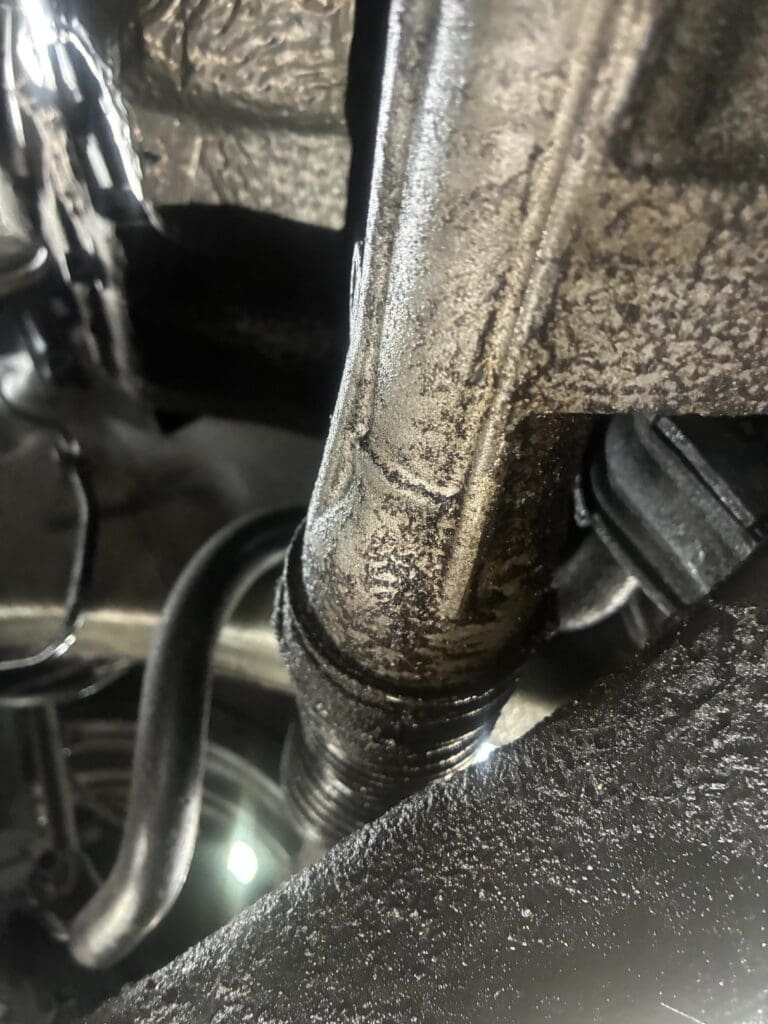
Oil Residue Where It Shouldn’t Be
At 230,000 miles, it’s common to see some oil residue creeping around gaskets, pan bolts, and seals. On its own, a small amount of seepage isn’t an emergency. But it’s worth tracking rather than ignoring, seals only get more worn over time, not less, and a slow seep now can become a real leak later. Anywhere oil doesn’t belong is a good candidate for a closer look during regular maintenance.
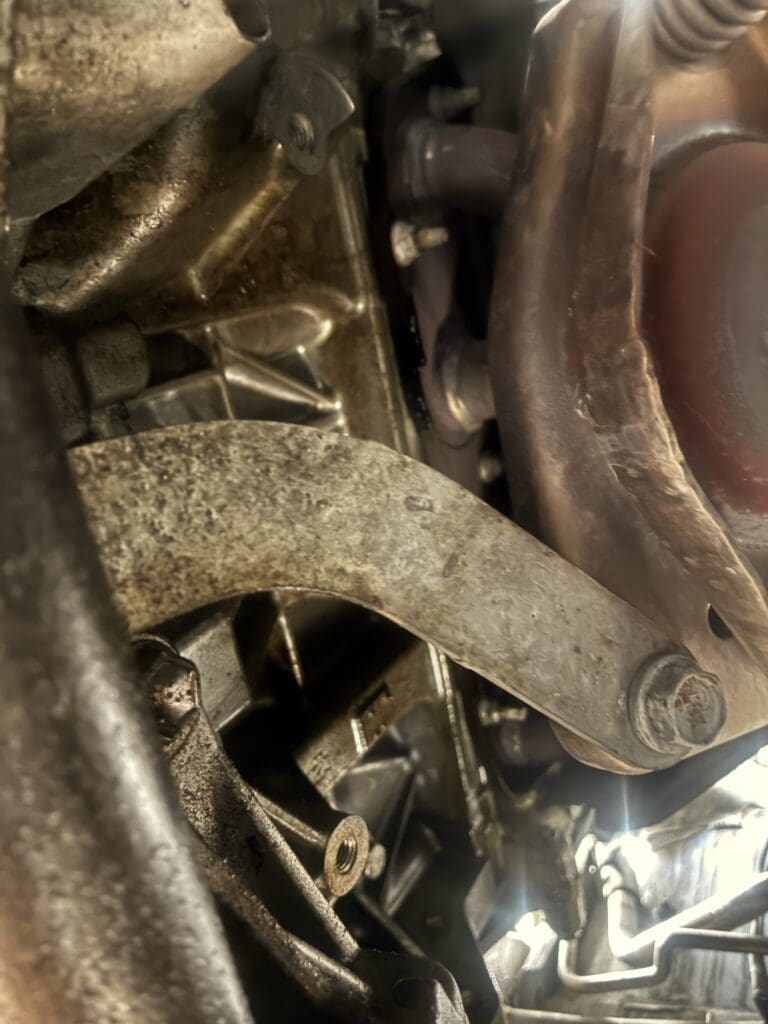
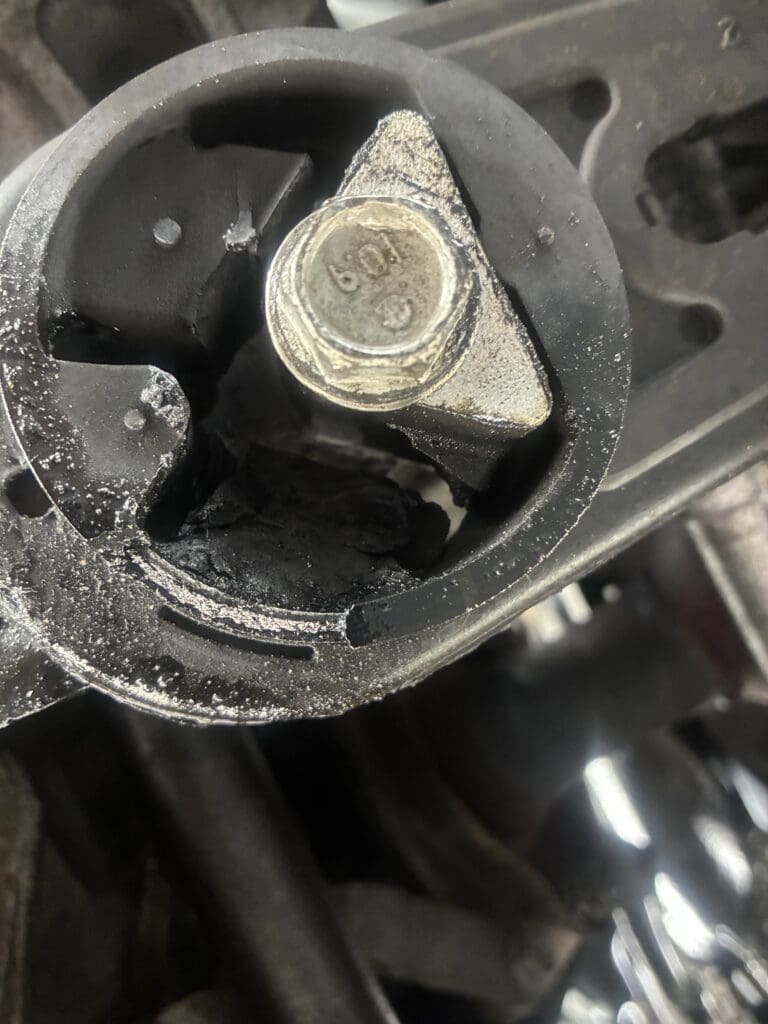
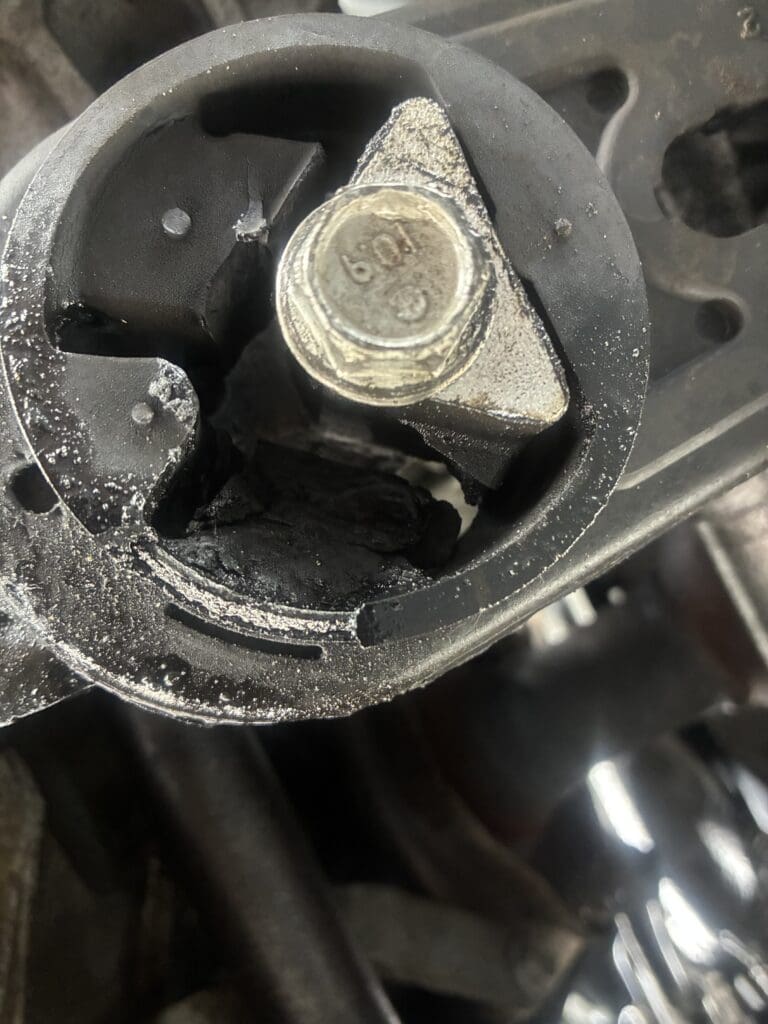
The Engine Mount
Engine mounts are rubber-and-metal components designed to hold the engine in place while absorbing vibration. Rubber doesn’t age gracefully, heat cycling and time cause it to crack, harden, and eventually crumble, exactly like what’s visible here. A deteriorated motor mount lets the engine shift around more than it’s supposed to under acceleration and braking, which puts extra stress on everything connected to it: mounts, hoses, and wiring nearby. It’s rarely a dramatic failure, but it is a gradual one that gets more noticeable, and more expensive to ignore, over time.
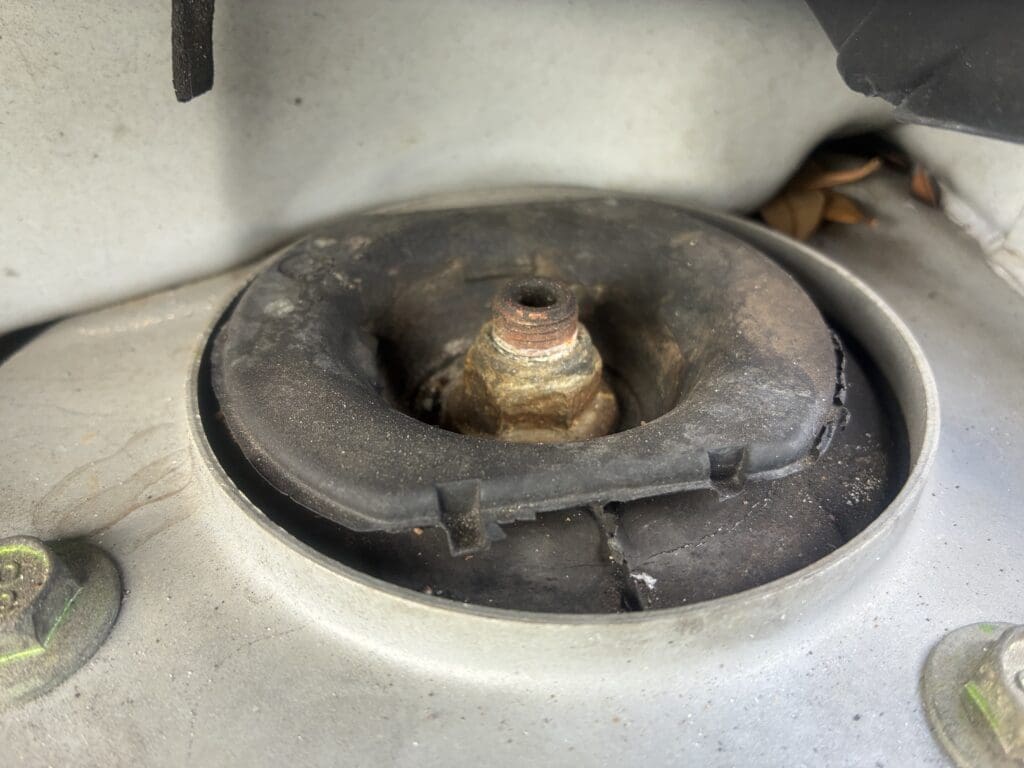
The Strut Mount
The rubber boot on a strut mount protects the bearing and hardware underneath from water and debris while allowing the suspension to move smoothly. At this mileage, that rubber has dried out and cracked significantly, you can see the texture has gone from smooth to something closer to sun-baked leather. Once a strut mount boot fails like this, moisture and grit get direct access to components that were never meant to be exposed, accelerating wear on parts that are considerably more expensive to replace than the boot itself.
What This Adds Up To
Individually, none of these are “the car is about to break down” issues. Collectively, they’re exactly what you’d expect from a car that’s been driven hard and driven long, which, at 230,000 miles, is a genuine accomplishment, not a complaint. The real takeaway is this: high-mileage cars don’t fail all at once. They tell you, piece by piece, well before anything strands you on the side of the road, if someone takes the time to look.
Engine mounts, CV boots, strut mounts, and oil seals are exactly the kind of components worth a periodic check once a car passes into six-figure mileage territory. Catching wear here is inexpensive. Catching it after something fails from neglect rarely is.
Serving Orlando, FL and the surrounding cities. 📞 (321) 466-5222 🌐 johnnyonthegoautocare.com
If your car’s got some real miles on it, we come to you for a full once-over, better to find this stuff on our terms than yours, stuck on the shoulder.
____________________________________________________________________________________________________