
____________________________________________________________________________________________________
The $40 Sensor That Can Turn Into a $2,000 Repair (Mitsubishi 2.4L)
Some of the most expensive repairs we see don’t start out expensive at all. They start as something small, a seep, a stain, a connector that’s a little oilier than it should be, that gets left alone long enough to turn into something much bigger. The Mitsubishi 2.4L four-cylinder engine has a textbook example of exactly this, and it’s common enough that it’s worth knowing about even if your car isn’t leaking anything today.
The Leak Point
On these engines, there’s a single-pin sensor mounted on the back of the engine block. Over time, usually due to a worn seal or gasket at the sensor’s mounting point, oil begins to seep out around it. Left unaddressed, that seep becomes an active leak.
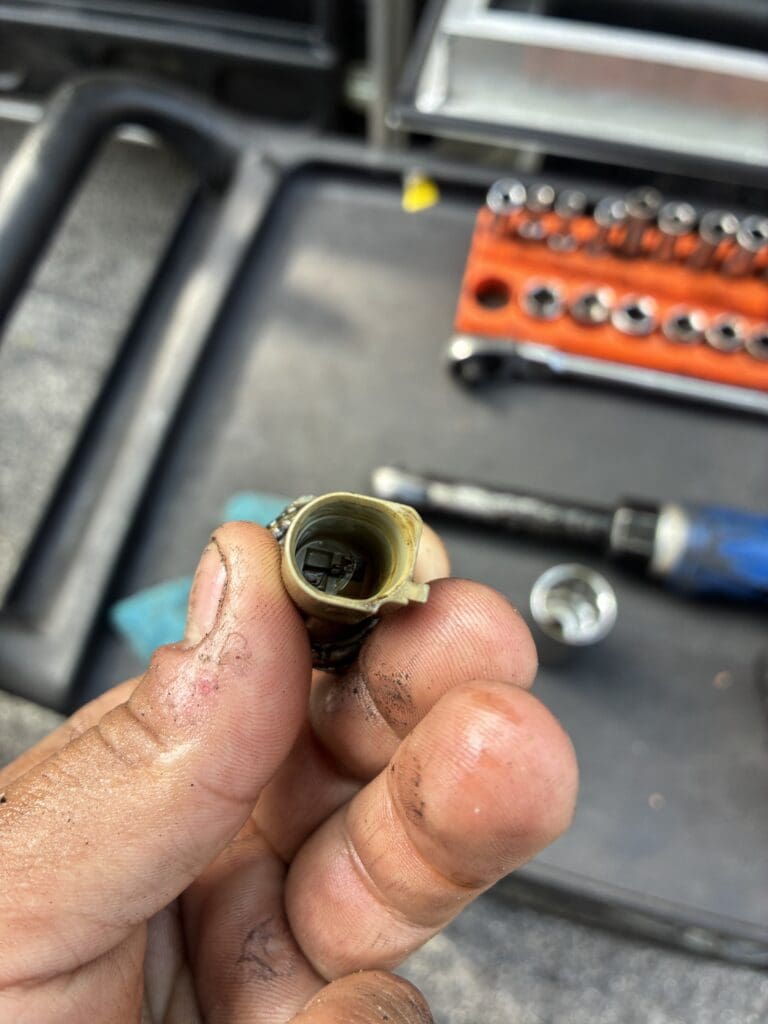
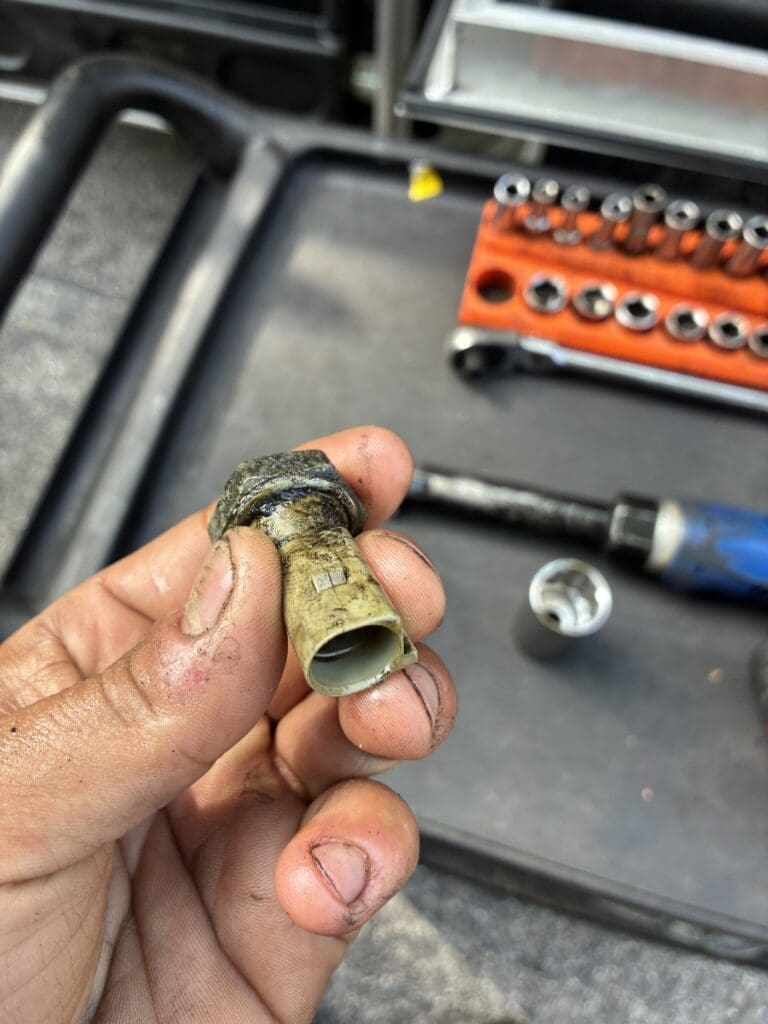
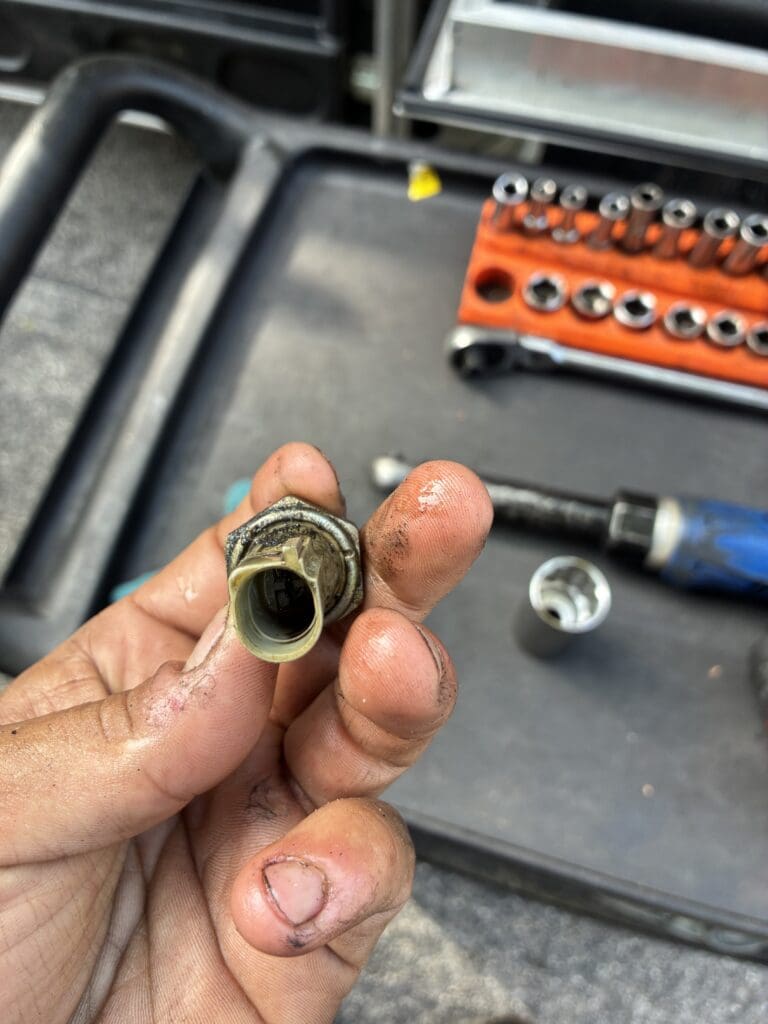
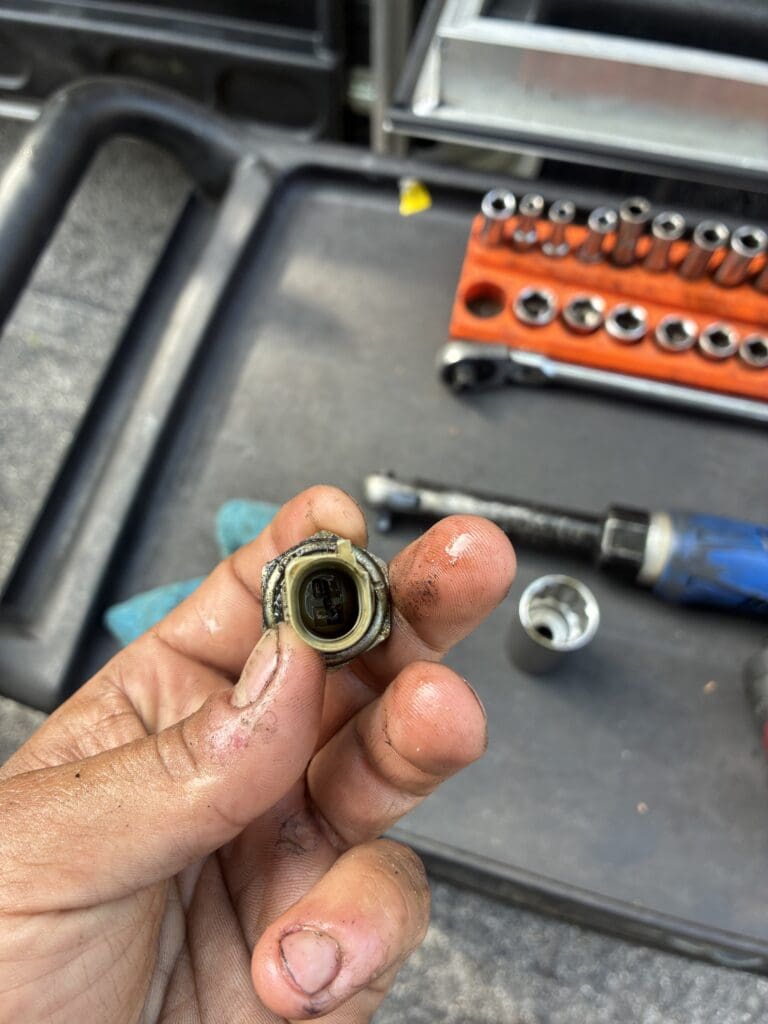
Here’s the sensor and connector pulled after sitting in that oil for a while. You can see the discoloration and residue built up around the terminal, this isn’t a fresh drip, this is oil that’s been sitting there and slowly working its way into places it shouldn’t be.
Why a Simple Oil Leak Turns Into an Electrical Problem
This is the part that surprises most people: the danger here isn’t really about losing oil. It’s about where the oil is going.
That sensor has an electrical connector, and once oil starts leaking around the base, it doesn’t stay contained to the outside of the housing, it works its way into the connector itself. From there, it can travel up into the sensor’s internal contacts and even migrate into the wiring harness through capillary action, coating the pins and wire strands inside.
Oil-contaminated electrical contacts don’t fail cleanly. Instead of a clear “it’s broken” signal, you tend to get intermittent connections, corroded terminals, and signal issues that come and go, the kind of problem that’s maddening to chase down once it’s spread into the harness itself. What started as a $40 sensor and a simple seal can turn into a harness repair or replacement, which is a dramatically bigger job in both time and cost.
The Math That Makes This Worth Catching Early
This is genuinely one of those repairs where timing changes everything:
- Caught early: replace the sensor and reseal the mounting point. Simple, inexpensive, done in one visit.
- Caught late: the harness itself may need repair or replacement if oil has migrated far enough into the wiring, which means more labor, more parts, and a repair that can run into the hundreds or even thousands of dollars depending on how far the contamination has spread.
That’s an enormous gap in cost for a problem that starts as a single small seal.
What to Watch For
You don’t need to be a mechanic to catch this early. A few signs worth paying attention to:
- Oil residue or staining on the back of the engine block that wasn’t there before
- A faint burning-oil smell after the engine’s been running
- Any electrical gremlins, a sensor reading intermittently, a warning light that comes and goes, or a connector that looks unusually oily when you’re doing other work under the hood
None of these are dramatic on their own, which is exactly why they get ignored. But on this engine, an oily connector in this specific area is a strong early warning sign, not just a cosmetic issue.
Our Advice
If you notice any oil where it shouldn’t be, especially anywhere near sensors, connectors, or wiring, get it looked at right away rather than waiting to see if it gets worse. It almost always does. A same-day fix for a leaking seal is a fraction of the cost of chasing electrical gremlins through a contaminated harness six months later.
Serving Orlando, FL and the surrounding cities. 📞 (321) 466-5222 🌐 johnnyonthegoautocare.com
Give us a call to get any oil leak addressed before it becomes an electrical one.
____________________________________________________________________________________________________